
The digital marketing ecosystem is undergoing a major shift as global regulators tighten rules around data usage, tracking, and personalization. Governments and consumer-rights bodies are pushing for greater transparency and consent, forcing brands and ad platforms to reconsider how they collect, store, and activate user data.
This shift is redefining how personalization works and pushing marketers toward more ethical, data-secure strategies.
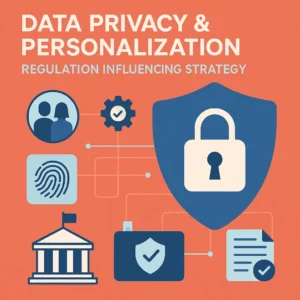
Why Data Privacy Reform Is Happening
Consumers are increasingly aware of how their data is used. At the same time, many regions now have strict privacy frameworks such as:
-
GDPR in Europe
-
Digital Markets Act (DMA)
-
CCPA in California
-
India’s Digital Personal Data Protection Act (DPDPA)
These regulations are designed to give users more control over their personal information, minimize unauthorized tracking, and ensure ethical advertising practices.
As a result, platforms like Meta, Google, and TikTok must comply by changing how personalization and ad targeting work.
Latest Developments Impacting Marketers
1. Reduced access to third-party data
Marketers can no longer rely heavily on third-party cookies and cross-platform tracking. Browsers like Chrome and Safari are phasing out these mechanisms completely.
This forces brands to adopt first-party data and server-side tracking strategies.
2. Meta now offers “limited personalization” options
Under EU regulations, Meta must allow users to opt out of fully personalized ads. This affects targeting accuracy and forces brands to use broader segments instead of hyper-granular targeting.
This is likely to influence other regions over time.
3. Restricted user-level identifiers
Device IDs, precise location data, and sensitive demographic information are increasingly limited or removed entirely.
This makes traditional performance marketing less predictable and increases reliance on machine learning models that use aggregated, anonymized data.
4. Consent-first frameworks
Websites must clearly communicate:
-
What data is collected
-
Why it’s collected
-
How it’s used
Consent management platforms (CMPs) are now essential, especially for businesses operating in multiple regions.
How These Regulations Influence Marketing Strategy
1. Shift from targeted ads to contextual ads
Since hyper-personalization is harder, advertisers are turning to contextual targeting based on:
-
Page content
-
Topics
-
Keywords
-
On-site user behavior
This aligns ads with content rather than personal data.
2. First-party data becomes the new competitive advantage
Brands are prioritizing:
-
Email lists
-
Loyalty programs
-
App data
-
CRM insights
-
Surveys and feedback loops
First-party data is more dependable, compliant, and cost-efficient.
3. Privacy-centric personalization
Marketers now use anonymous profiles, interest groups, and aggregated signals instead of individual-level identifiers. This is known as “privacy-preserving personalization.”
4. Increased importance of transparency and trust
Brands that communicate openly about data usage gain trust and higher engagement. Clear messaging about privacy can improve brand perception and customer retention.
5. AI plays a bigger role in modeling and prediction
With less user-specific data, AI models help marketers:
-
Predict user behavior
-
Fill in missing data
-
Optimize campaigns with limited signals
AI-driven attribution and measurement are becoming essential.
Opportunities for Marketers
Despite the challenges, privacy reform opens strong opportunities:
-
Build more trusted and loyal customer relationships
-
Use first-party data to create exclusive audience insights
-
Implement consent-based personalization that feels ethical and transparent
-
Reduce reliance on big ad platforms
-
Leverage AI to improve measurement and targeting without intruding on user privacy
Conclusion
Data privacy and personalization reforms are reshaping digital marketing. Instead of hyper-targeting users without consent, the future is built on trust, transparency, first-party data, and privacy-centric personalization.
Marketers who adapt early will gain:
-
Better brand credibility
-
More sustainable customer relationships
-
Higher long-term ROI
Those who resist will face rising costs, reduced targeting accuracy, and potential compliance risks.